How much should a photographer mark up prints ordered through a proofing gallery?
Print pricing inside a gallery is not just lab cost plus a little extra. Here is how to think about markup, packaging, and the mistakes that leave money on the table.
Start from what the print costs you, all of it
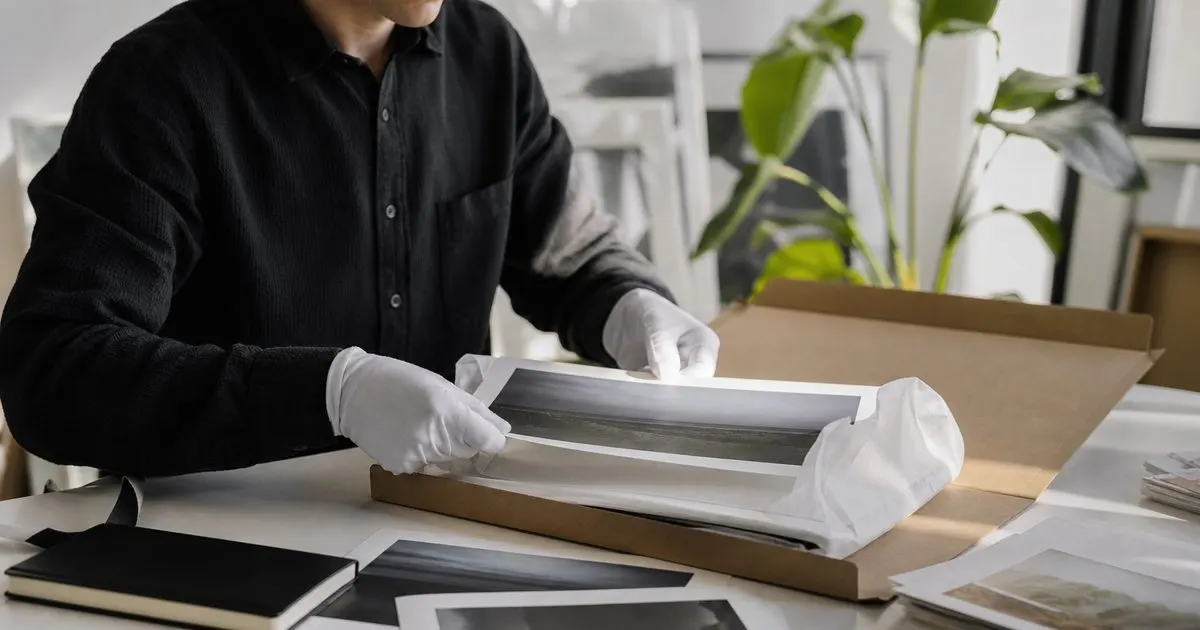
The number most photographers anchor on is the lab's price for the print, and that number is only the beginning. Add shipping from the lab, packaging if you ship to the client yourself, payment processing, the platform's commission if it takes one, sales tax handling, and the reprint you will occasionally eat when something arrives damaged. Then add the part everyone forgets: your time. Reviewing the order, checking crops, soft-proofing the file, and answering "has it shipped yet" all cost real minutes. Related: Streamlining Client Proofing After a Shoot
Once you have an honest cost per print, the markup conversation gets clearer. A multiple of that full cost is the most common approach. There is no official figure, but in common practice photographers who sell prints seriously tend to land somewhere around three to five times what the print costs them, with large wall pieces and premium papers often priced higher than that and small gift prints sometimes a little lower. That sounds aggressive until you remember that the print is the only physical thing the client will ever hold from the session, and it is carrying the value of the entire shoot.
Keep reading: Streamlining Client Proofing After a Shoot, Why Image Numbers Over Email Fail, Setting Client Expectations for Selections. See how Framepickr helps you photographer client proofing galleries with print-order markup.
Price the value, not the paper
A client is not buying eight by ten inches of photographic paper. They are buying a finished object that proves the session was worth it, and their reference point is not the lab's price list, which they will never see. Their reference point is what a framed piece of art costs, what a canvas from a home goods store costs, and what they already paid for the session. Pricing that sits well below those anchors reads as low quality, not as a bargain.
This is why flat, tiny markups backfire. If a print in your gallery costs about what a drugstore print costs, the client assumes it is the same product and either orders nothing or orders one small print out of politeness. Higher prices with clear quality signals, such as naming the paper type, showing a photo of a real print, and explaining that colors are corrected by hand, typically produce fewer objections and larger orders than bargain pricing does. Related: How long should a photographer keep a client proofing gallery open?
Use structure to guide the order
Individual print prices matter less than the structure around them. Most gallery print sales are won or lost on whether there is an obvious, sensible thing to buy. A small number of sizes with a clear step between them, one or two packages that bundle a large piece with a few smaller ones, and a gentle discount for ordering everything at once will outperform a menu of forty options at forty prices. Decision fatigue kills print orders more reliably than sticker shock. Related: Turning Proofing Into Print Sales
Think about what you want the client to do with the print too. If your goal is walls, price large sizes so that the jump from a small print to a wall-sized one feels reasonable, and price tiny prints high enough that they are not the default. If your goal is gifts for grandparents, offer a multi-print set at a package price. The markup should serve the outcome you want, not a formula applied evenly across every size.
Review the numbers each season, not each order
Lab prices change, shipping changes, your skill and reputation change. Revisit your print pricing once or twice a year, adjust the entire price list at the same time, and apply the new prices to galleries going forward rather than to galleries already open. Clients who are mid-decision deserve the prices they were shown. Note the change date in your records so you can answer any question about why one client paid a different amount from another.
Resist the urge to tinker order by order. Discounting for one client because they seemed hesitant, or bumping a price because another seemed wealthy, creates inconsistency you will have to defend later. Build the flexibility into the structure instead: a package for the budget-conscious, a premium option for people who want the best, and everything at a stated price. A proofing gallery that shows the same honest pricing to every client is easier to run and easier to trust. Related: Why Image Numbers Over Email Fail
- Calculate the full cost of a print including shipping, processing, commissions, reprints, and your time, then price at a multiple of it, commonly around three to five times.
- Price against what the client compares to, which is framed art and the session fee, not the lab's invoice.
- A few sizes and one or two packages outsell a long menu every time.
- Adjust prices on a seasonal schedule for new galleries, never mid-order or client by client.

Julien Jimenez
Julien Jimenez is an independent software builder based in Paris. He designs, ships, and operates focused SaaS products for small businesses and independent professionals. Read the full author page.
Let clients pick their photos without the back and forth
Photographer client proofing galleries with print-order markup. Framepickr is built to help you put this into practice.
Create a galleryMore from the Framepickr blog
Streamlining Client Proofing After a Shoot
Why Image Numbers Over Email Fail

Setting Client Expectations for Selections
Get the Framepickr playbook
Practical guides on photo proofing, straight to your inbox as we publish them. No spam, unsubscribe any time.